
Empowering India’s Growth Engine: Guide to MSME
In the vibrant landscape of India’s economy, a powerful force often operates behind the scenes yet drives significant growth, innovation,
and employment: the micro, small, and medium enterprises (MSME) sector.
Far from being merely small businesses, MSMEs are the backbone of industrial development,
contributing substantially to the nation’s Gross Value Added (GVA), exports, and job creation.
For aspiring entrepreneurs and existing business owners alike, understanding what an MSME is,
how it’s classified, and the array of support it can access is paramount for sustainable growth and success.
What Exactly is an MSME? Defining the Core
The term MSME is an acronym for micro, small, and medium enterprises.
These are businesses classified based on specific criteria related to their investment in plant, machinery, or equipment and their annual turnover.
The Government of India, through the Ministry of Micro, Small, and Medium Enterprises, is the apex body responsible for the formulation and administration of policies, rules, and laws pertaining to this vital sector.
The classification of MSMEs is not static; it undergoes revisions to reflect the evolving economic landscape and to ensure more businesses can benefit from the designated support.
It’s crucial to be aware of the latest classification criteria, which were significantly updated, effective April 1, 2025, as part of the Union Budget 2025 initiatives.
The Revised MSME Classification (Effective April 1, 2025):
To foster a more inclusive and growth-oriented environment,
the Indian government has revised the investment and turnover limits for MSME classification.
This move aims to allow more enterprises to qualify as MSMEs,
thereby expanding their access to various government benefits and support schemes.
Here’s a breakdown of the updated criteria:
Micro Enterprises:
- Investment in Plant & Machinery/Equipment: Not exceeding ₹2.5 crore
- Annual Turnover: Not exceeding ₹10 crore
Small Enterprises:
- Investment in Plant & Machinery/Equipment: Not exceeding ₹25 crore
- Annual Turnover: Not exceeding ₹100 crore
Medium Enterprises:
- Investment in Plant & Machinery/Equipment: Not exceeding ₹125 crore
- Annual Turnover: Not exceeding ₹500 crore
It’s important to note that an enterprise will be classified in a particular category only if it meets both the investment and turnover limits specified for that category.
These revised limits provide businesses with more room to grow without immediately losing their MSME status,
encouraging investment and expansion.
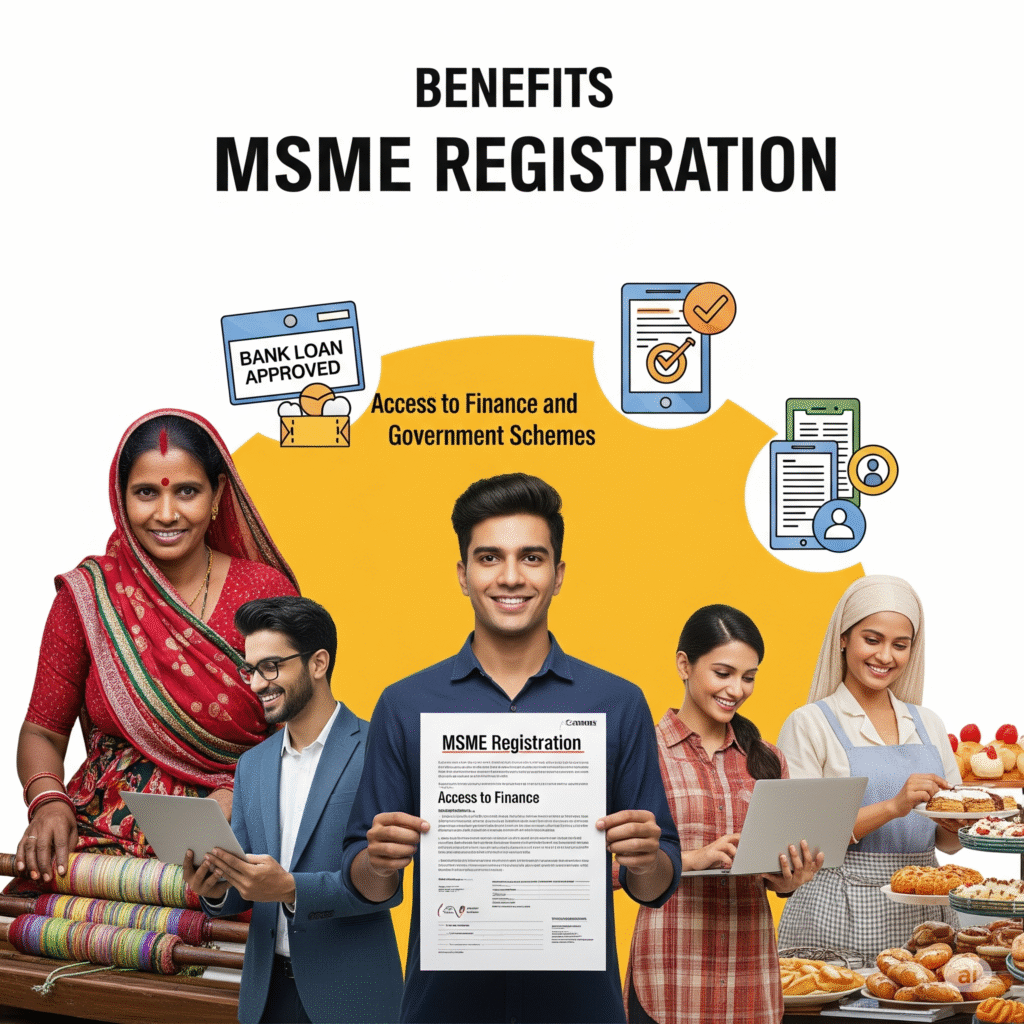
The Power of Recognition: Why MSME Registration Matters
While MSME registration is not mandatory, it is highly advisable for businesses that meet the criteria.
Registering your business as an MSME, primarily through the Udyam Registration Portal,
unlocks a plethora of benefits and opportunities designed to foster growth and stability.
This online, fee-free process has significantly simplified the journey for entrepreneurs.
Here are some of the key advantages of Udyam Registration:
Easier Access to Credit and Financial Support:
- Collateral-Free Loans: Registered MSMEs can avail of collateral-free loans under schemes like the Credit Guarantee Fund Trust for Micro and Small Enterprises (CGTMSE), reducing the burden of collateral requirements.
- Lower Interest Rates: Banks often offer loans to MSMEs at significantly lower interest rates (sometimes 1-1.5% lower than regular loans), making capital more affordable.
- Priority Sector Lending: Banks are mandated to lend a certain percentage of their total credit to the MSME sector, ensuring priority access to funds.
Tax Benefits and Subsidies:
- Reduced Tax Rates: MSMEs can benefit from reduced tax rates and exemptions under various tax laws.
- Extended MAT Credit Period: The credit period for Minimum Alternate Tax (MAT) has been extended to 15 years from 10 years, offering greater financial flexibility.
- Subsidies on Patents and ISO Certification: The government provides subsidies for obtaining patents and reimbursement of fees for ISO certification, encouraging innovation and quality.
Protection Against Delayed Payments:
- The Micro, Small and Medium Enterprises Development (MSMED) Act, 2006, provides legal recourse for registered MSMEs against delayed payments from buyers. If a buyer delays payment beyond 45 days, the MSME is eligible to charge compound interest at three times the rate notified by the RBI. This greatly enhances cash flow and financial health.
Government Procurement and Tenders:
- Public Procurement Policy: The government mandates that 25% of its annual procurement from central ministries, departments, and central public sector enterprises (CPSEs) must be sourced from micro and small enterprises (MSEs).
- Exemption from Earnest Money Deposit (EMD): Registered MSMEs are often exempt from paying Earnest Money Deposits (EMD) when participating in government tenders, making it easier to bid for contracts.
- Integration with GeM Portal: The Udyam Registration Portal is integrated with the Government e-Marketplace (GeM), providing easy access to government procurement opportunities.
Other Notable Benefits:
- Concessions on Electricity Bills: Many states offer concessions on electricity bills for registered MSMEs.
- Waiver of Stamp Duty and Registration Fees: Some states provide exemptions from stamp duty and registration fees for industrial units with Udyam Registration.
- Support for Skill Development and Entrepreneurship: Various government schemes focus on skill development, technological upgradation, and entrepreneurship promotion within the MSME sector.
The Udyam Registration Process: A Seamless Digital Journey
The process of registering as an MSME through the Udyam Registration Portal is entirely online, paperless, and free of cost, a testament to the government’s commitment to ease of doing business.
Here’s a simplified step-by-step guide:
- Visit the Official Udyam Registration Portal: Navigate to udyamregistration.gov.in.
- Enter Aadhaar and PAN Details: The Aadhaar number of the proprietor/partner/director is mandatory for authentication. PAN details are also required for business and tax compliance. The portal is integrated with income tax and GSTIN systems, fetching investment and turnover details automatically.
- Fill in Business Information: Provide comprehensive details about your enterprise, including the name, type of activity (manufacturing or service), business address, incorporation date, and the relevant NIC (National Industrial Classification) code.
- Declare Investment and Turnover: Based on the new classification criteria, declare your investment in plant and machinery/equipment and your annual turnover from the previous financial year.
- Submit the Form and Receive OTP: After reviewing all details, submit the form. An OTP will sent to your register mobile number for final verification.
- Receive Udyam Certificate: Upon successful verification, your Udyam Registration Certificate will be issued and can be downloaded directly from the portal. It includes a unique Udyam Registration Number (URN).
MSMEs: Driving India Towards Self-Reliance
The MSME sector is not just a collection of small businesses;
it is a dynamic ecosystem that embodies the spirit of entrepreneurship and innovation.
From traditional handicrafts to cutting-edge technology, MSMEs are present across all sectors.
adapting to market demands and contributing significantly to India’s “Make in India” and “Atmanirbhar Bharat” initiatives.
The government’s continued focus on strengthening this sector through policy reforms,
financial incentives and streamlined registration processes underscore its recognition of MSMEs as crucial drivers of economic growth, job creation, and equitable development.
For any individual or entity looking to embark on their entrepreneurial journey or seeking to expand their existing business,
understanding and leveraging the advantages offered to MSMEs is a strategic move towards sustainable success and contributing to the nation’s prosperity



No comment